
Last updated September 11, 2026
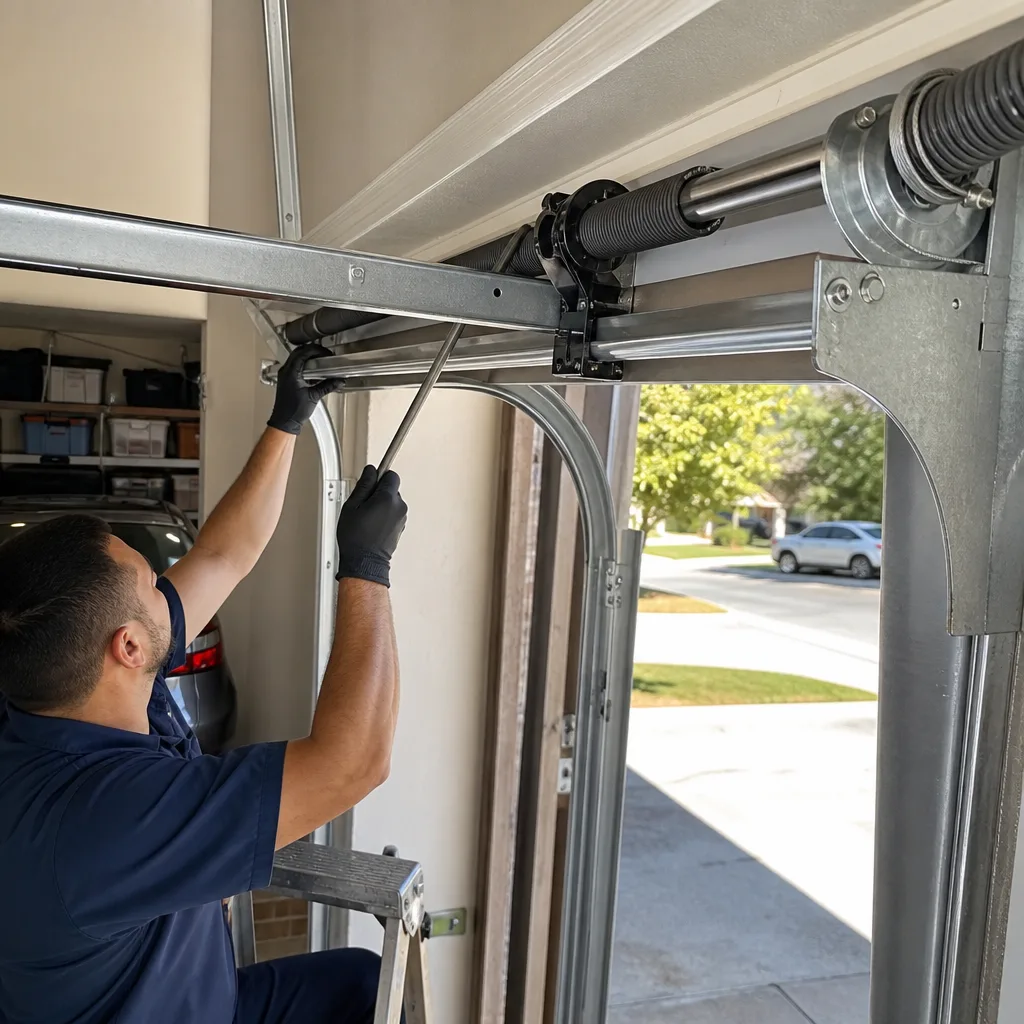
Full 25-point door and opener safety check with every visit - springs, cables, rollers, tracks, and your LiftMaster or Chamberlain opener included
You get a price before we start. It does not change when the truck arrives.
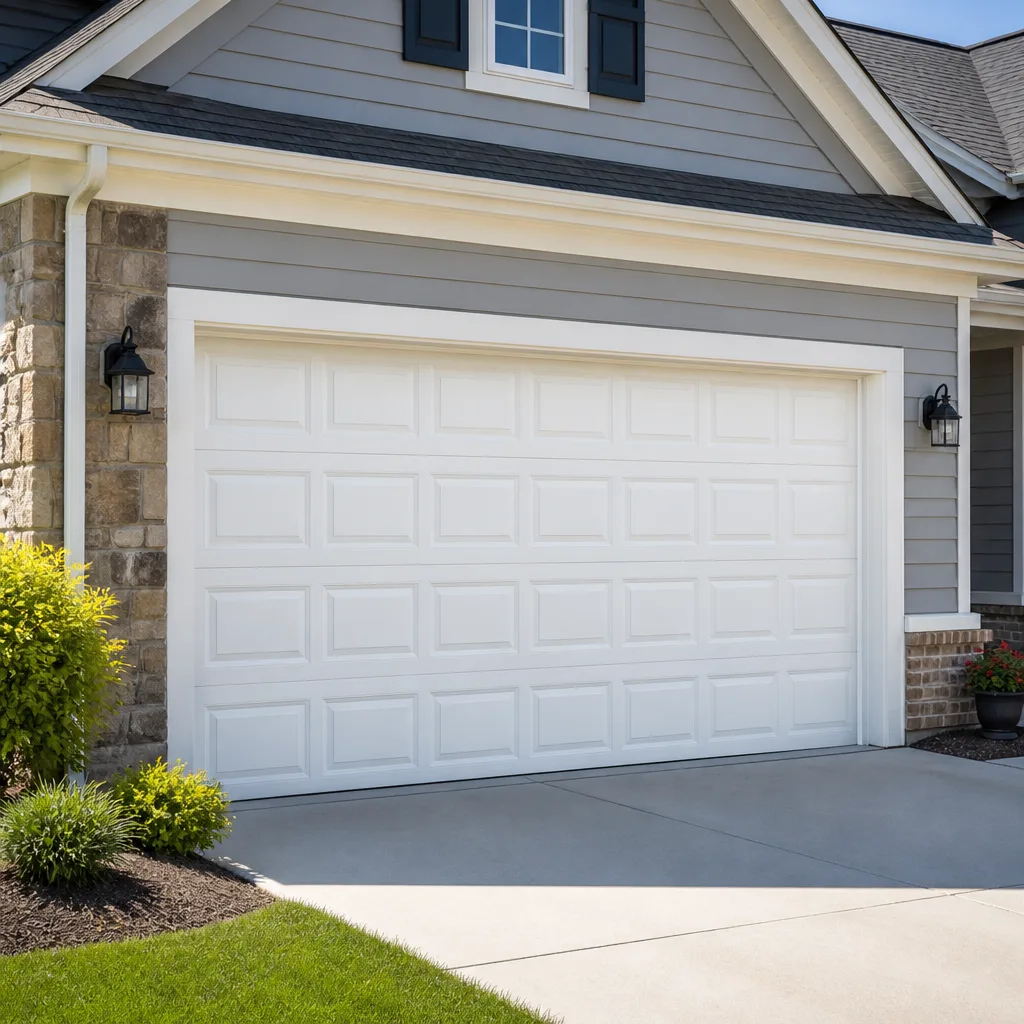
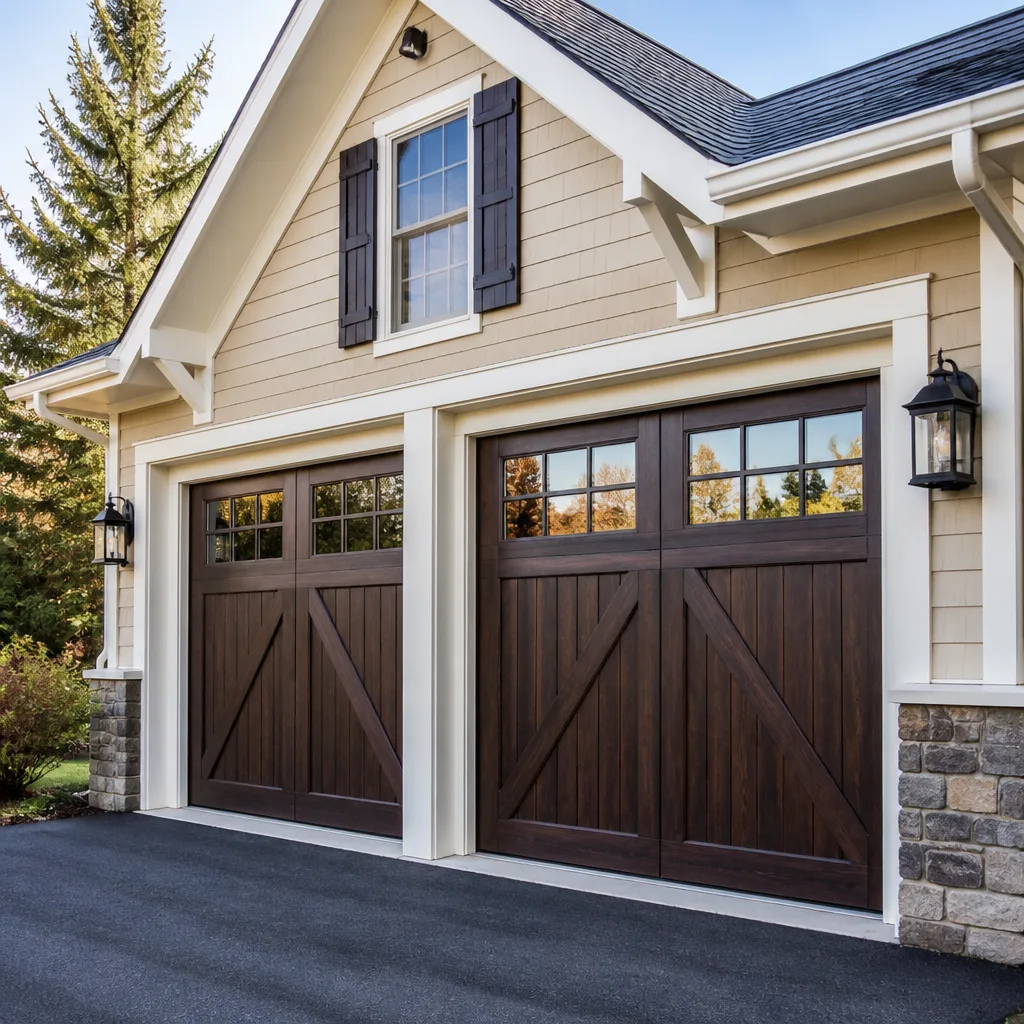
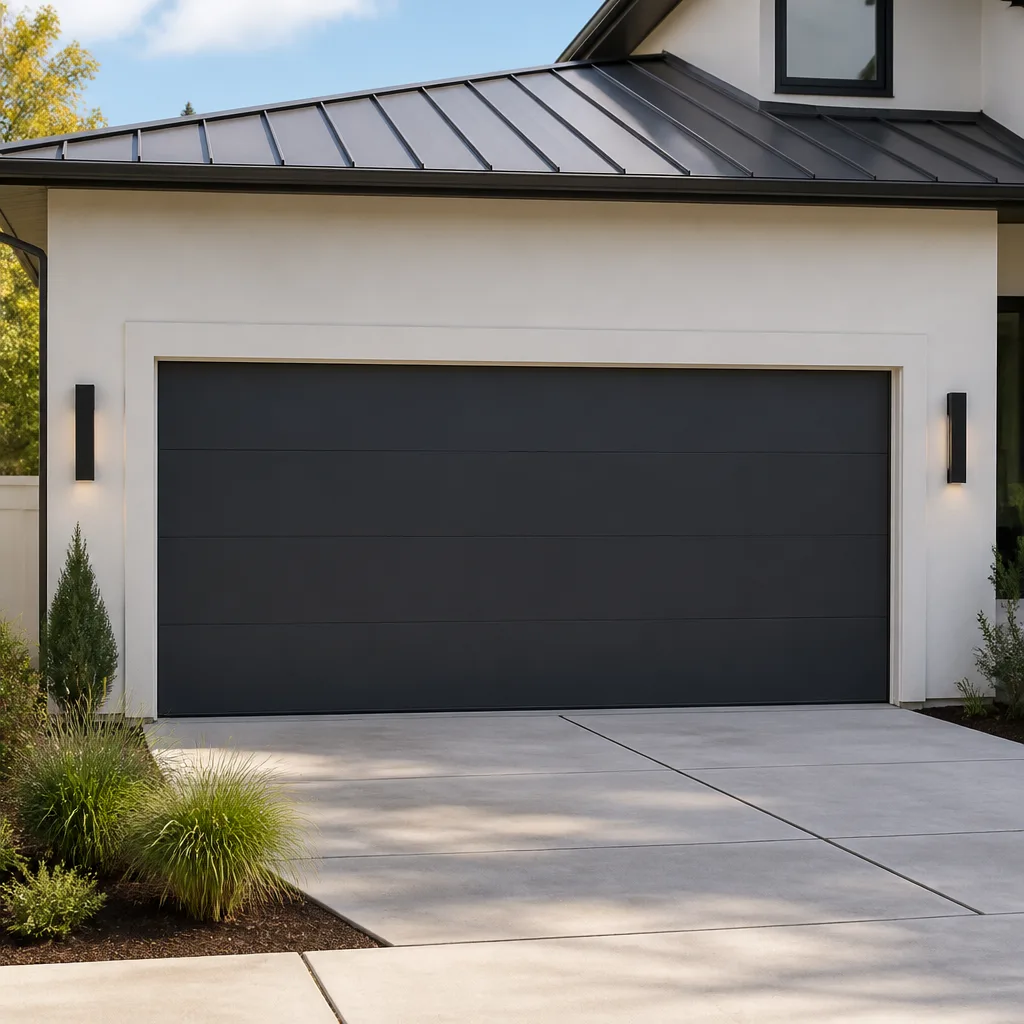
LiftMaster openers
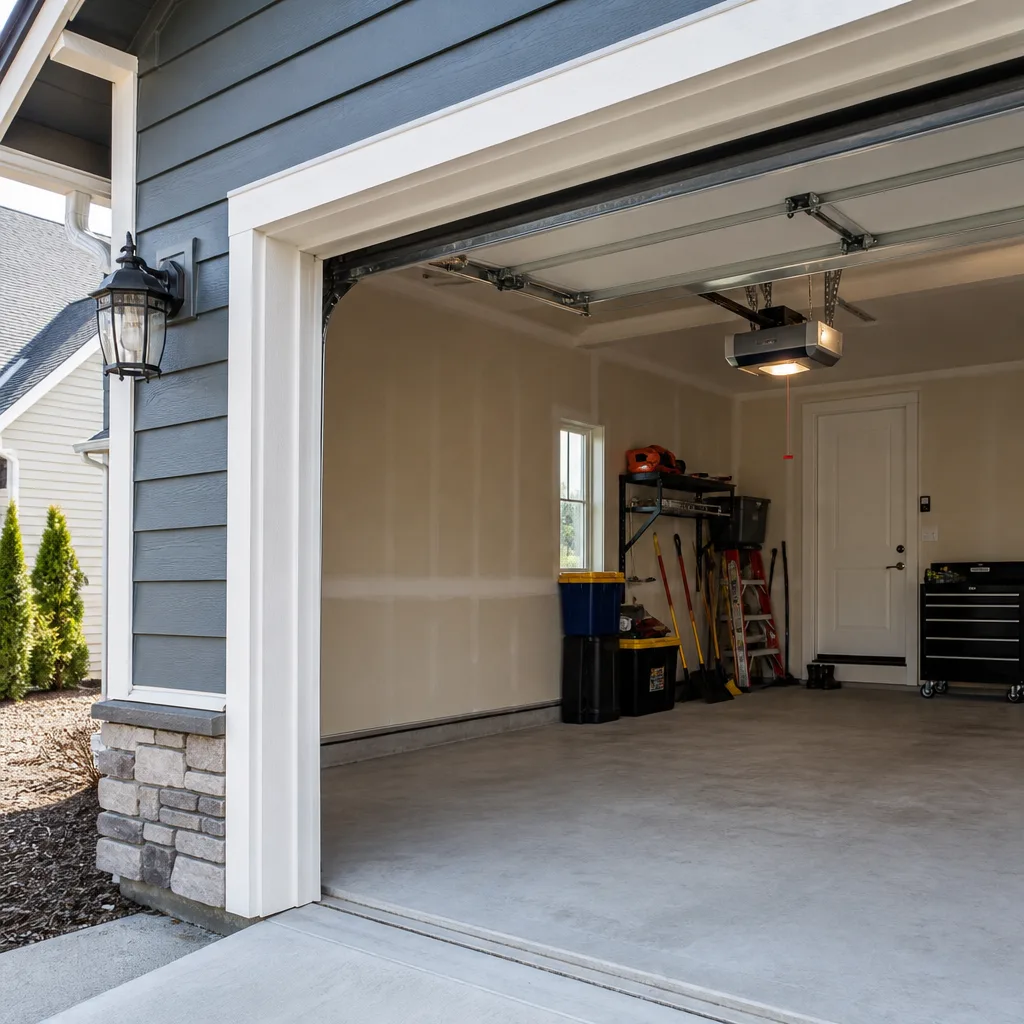
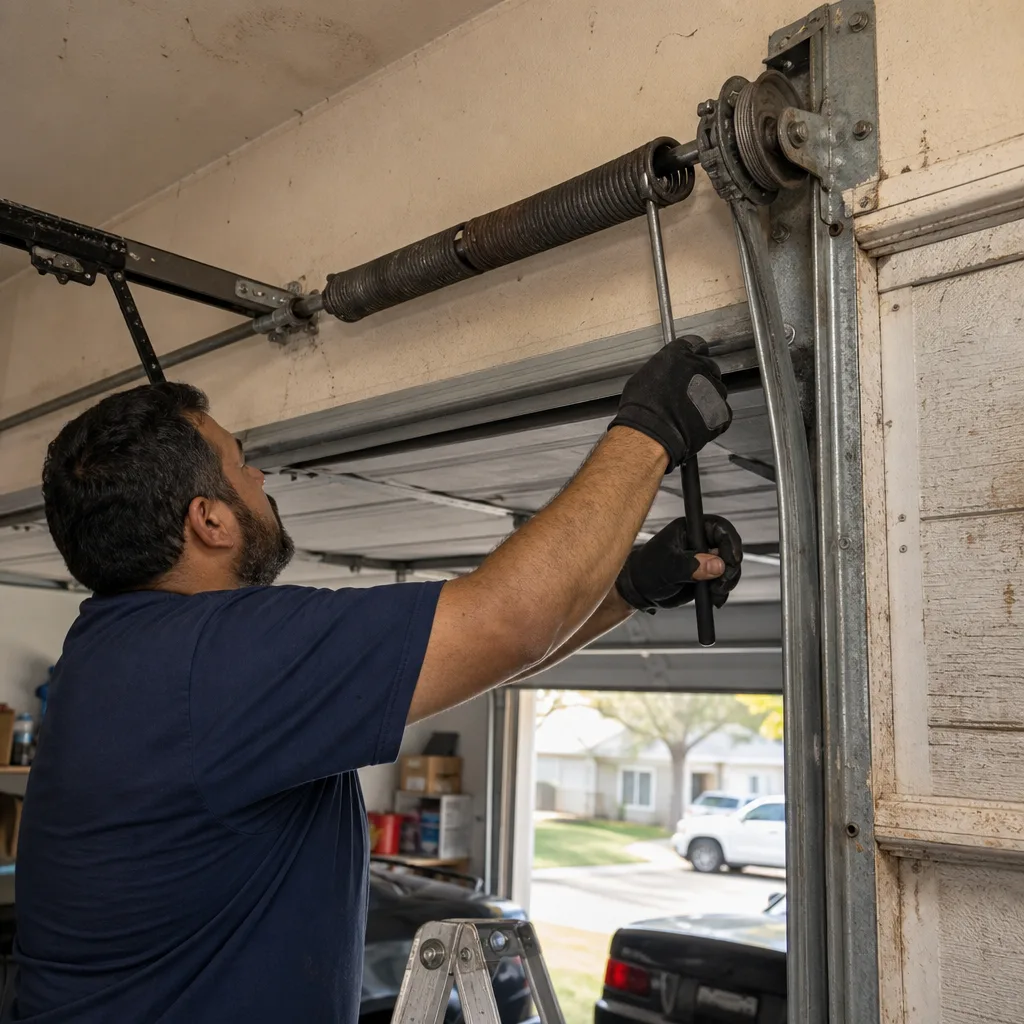 Before
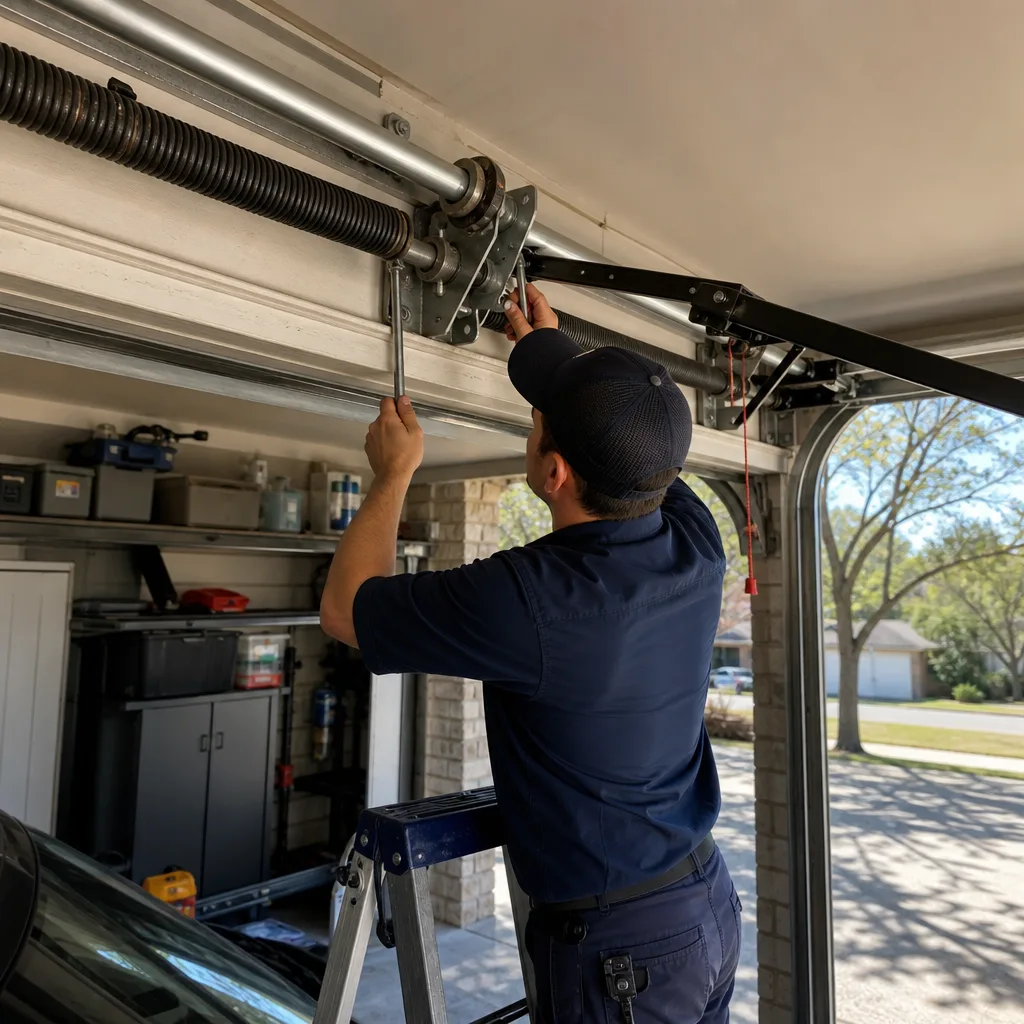 After
After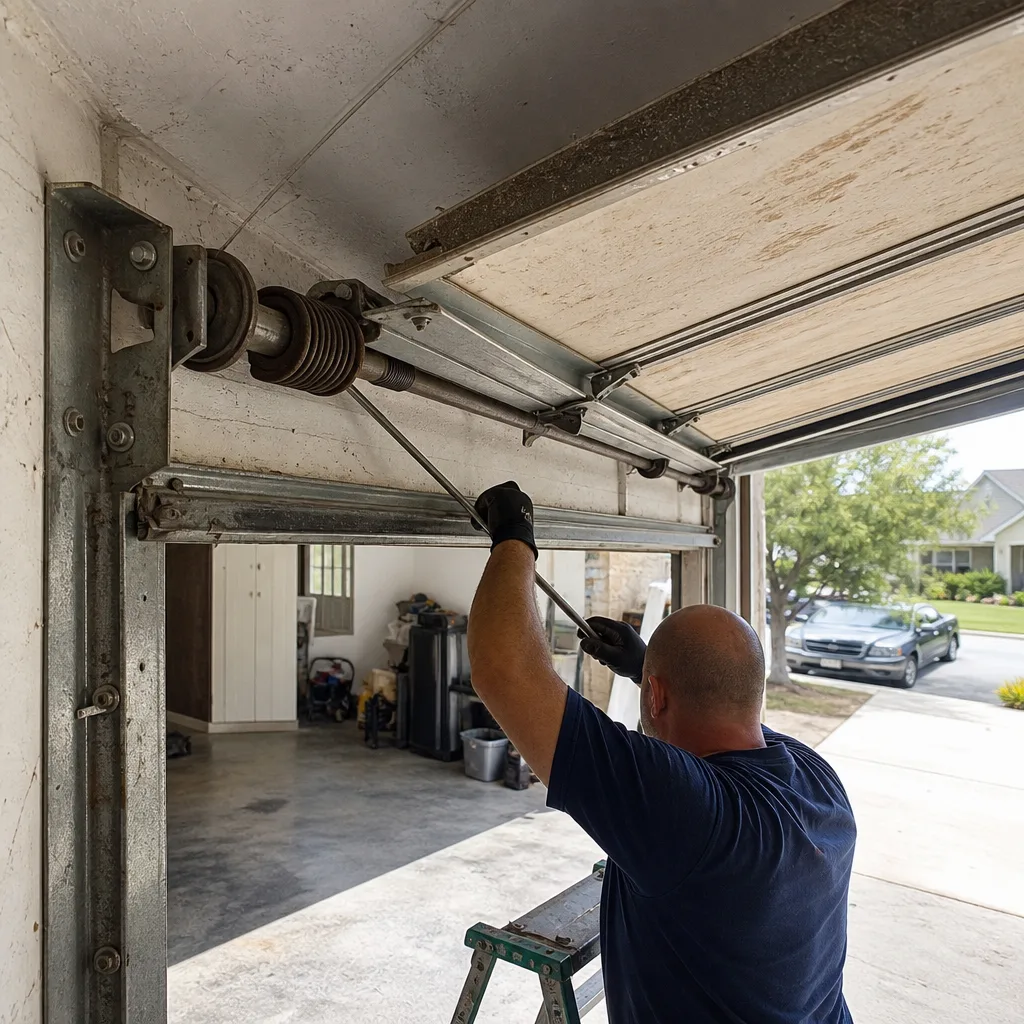 Before
 After
After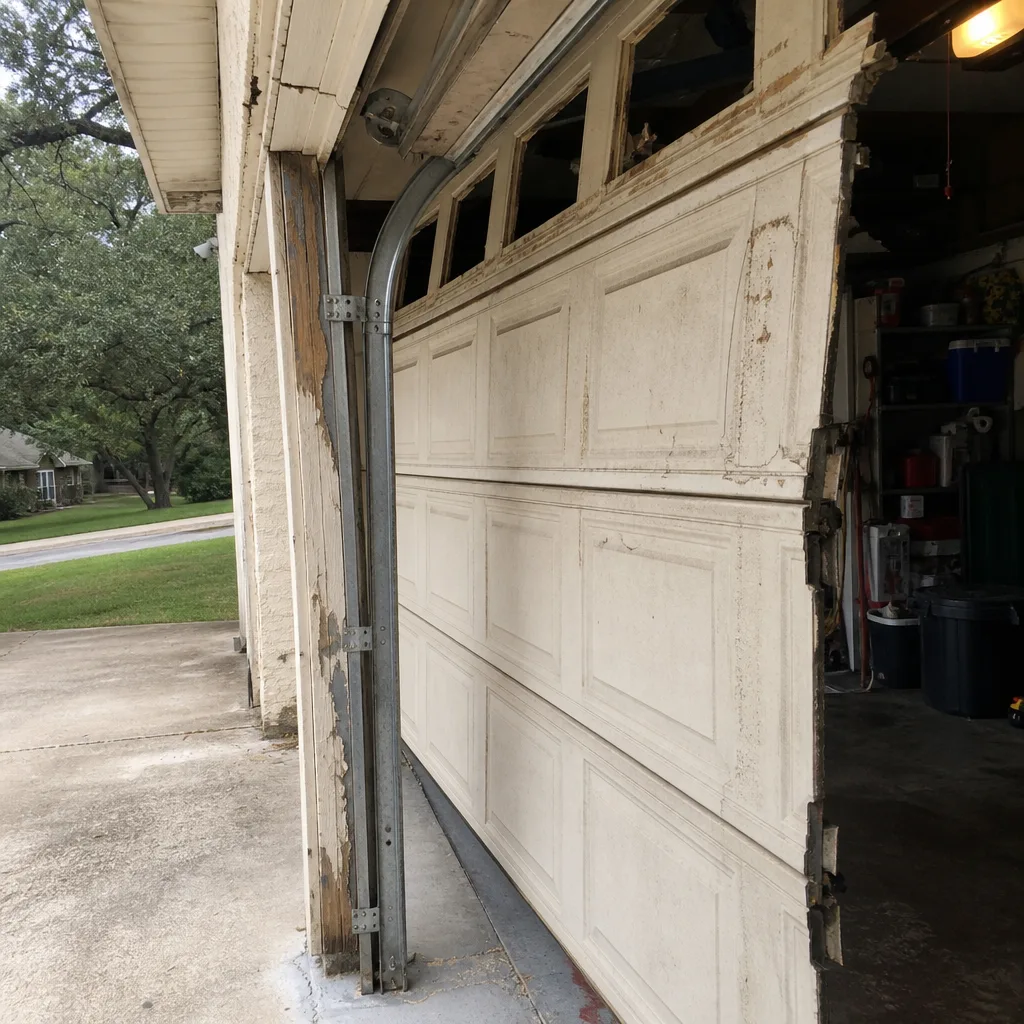 Before
 After
AfterThe Complete Guide to Garage Door in Fair Oaks Ranch
The average garage door in Fair Oaks Ranch cycles open and closed more than 1,500 times a year. Most homeowners cannot name a single component on it. That quiet reliability is the point, until it isn’t. A snapped spring at 6:00 a.m., an opener that quits during a Hill Country thunderstorm, or a door that suddenly lists to one side - these failures always arrive at the worst moment, and always force decisions under pressure. This guide maps every decision point ahead of time: material selection, sizing for local architecture, insulation that actually works in Texas heat, opener matching, and how to judge a service call before the truck arrives. Read it once, and you will never have to figure it out in a hurry.
Quick Answer
A garage door in Fair Oaks Ranch must withstand Hill Country temperature swings, caliche dust, and wind loads that exceed national averages, while matching the 3-car and oversized configurations common in local neighborhoods. The right door pairs a steel or composite skin with proper thermal break insulation, an opener sized to the door’s actual weight, and a service relationship with a local shop that stocks parts and answers the phone. Expect to invest $1,200-$3,800 for a quality replacement, or $180-$340 for most common repairs, with installation measured and scheduled rather than rushed.
Table of Contents
- How Hill Country Climate Affects Garage Doors in Fair Oaks Ranch
- Choosing the Right Material for Fair Oaks Ranch Conditions
- Sizing and Clearance: Matching Local Architecture
- Insulation Explained: R-Value vs. Thermal Break
- Openers and Smart Features That Hold Up
- Repair vs. Replace: A Decision Tree
- What to Expect From a Service Call
- Costs and Pricing in Fair Oaks Ranch
How Hill Country Climate Affects Garage Doors in Fair Oaks Ranch
Fair Oaks Ranch sits at roughly 1,200 feet elevation in the Texas Hill Country, where summer highs regularly push past 100 degrees and winter lows occasionally dip below freezing. That 80-degree swing stresses every component of a garage door system, and the local caliche soil creates dust that infiltrates tracks, rollers, and opener housings faster than in clay-soil regions.
We have seen the specific failure patterns that national spec sheets do not capture. In Fair Oaks Ranch neighborhoods like The Summit and Fair Oaks Ranch proper, south- and west-facing doors absorb afternoon sun that softens vinyl weatherstripping and degrades standard bulb seals within three to four years. The thermal expansion is equally punishing: a 16-foot steel door can grow nearly a quarter-inch across its width on a July afternoon, then contract overnight. That movement fatigues hinge points and stresses opener rail brackets that were torqued to mid-range specifications.
Wind is the overlooked factor. Fair Oaks Ranch experiences straight-line gusts above 50 mph several times yearly, particularly ahead of frontal systems. Doors rated to 20 psf wind load, adequate in inland markets, can flex visibly in these conditions. Over time, that flexing loosens roller brackets and elongates bolt holes in the top section.
Caliche dust is abrasive. It accelerates wear on steel rollers, contaminates lubricant within months, and packs into the spiral grooves of torsion springs, creating friction points that throw off spring balance. A door that felt smooth in March may grind by October if the track system has not been cleaned and re-lubricated.
The practical response is not exotic. It is specification discipline: wind-rated construction, thermal-break insulation, sealed-bearing nylon rollers, and a maintenance interval matched to local conditions rather than generic manufacturer recommendations.
Choosing the Right Material for Fair Oaks Ranch Conditions
Four materials dominate the garage door market, and each performs differently in Fair Oaks Ranch’s specific environment. The wrong choice shows itself within five years. The right one lasts twenty.
Steel
Steel remains the practical standard for Fair Oaks Ranch homes, and for sound reason. A 24- or 25-gauge steel door with galvanized coating resists the dents from wind-borne debris and holds paint through intense UV exposure. The critical detail is the back-side finish: bare steel on the interior face will sweat in humid months and rust from the inside out. We specify baked-on polyester or primer on both faces, with a thermal-break core that prevents the exterior skin temperature from conducting straight through to the interior.
Steel doors in Fair Oaks Ranch should carry a wind-load rating of at least 25 psf, and 35 psf if the garage faces an open field or hilltop exposure. Clopay’s Gallery and Canyon Ridge collections, specified with wind-load reinforcement, are common matches for the Hill Country stone and stucco exteriors in neighborhoods like The Hills of Fair Oaks.
Wood and Wood Composite
Wood doors offer unmatched aesthetic warmth against Fair Oaks Ranch’s limestone and cedar architectural vocabulary. They also demand the most maintenance. Unfinished cedar or redwood will gray and check within two summers of full sun exposure. Factory-applied stain with UV inhibitors extends that to six to eight years, but re-staining is non-negotiable.
Wood composite, particularly Clopay’s Canyon Ridge Limited Edition line, captures the grain texture with a composite overlay on steel or aluminum base construction. It eliminates the swelling, warping, and insect vulnerability of solid wood while preserving the visual character. For homeowners in Fair Oaks Ranch who want the look without the upkeep cycle, composite is the compromise that holds.
Aluminum and Glass
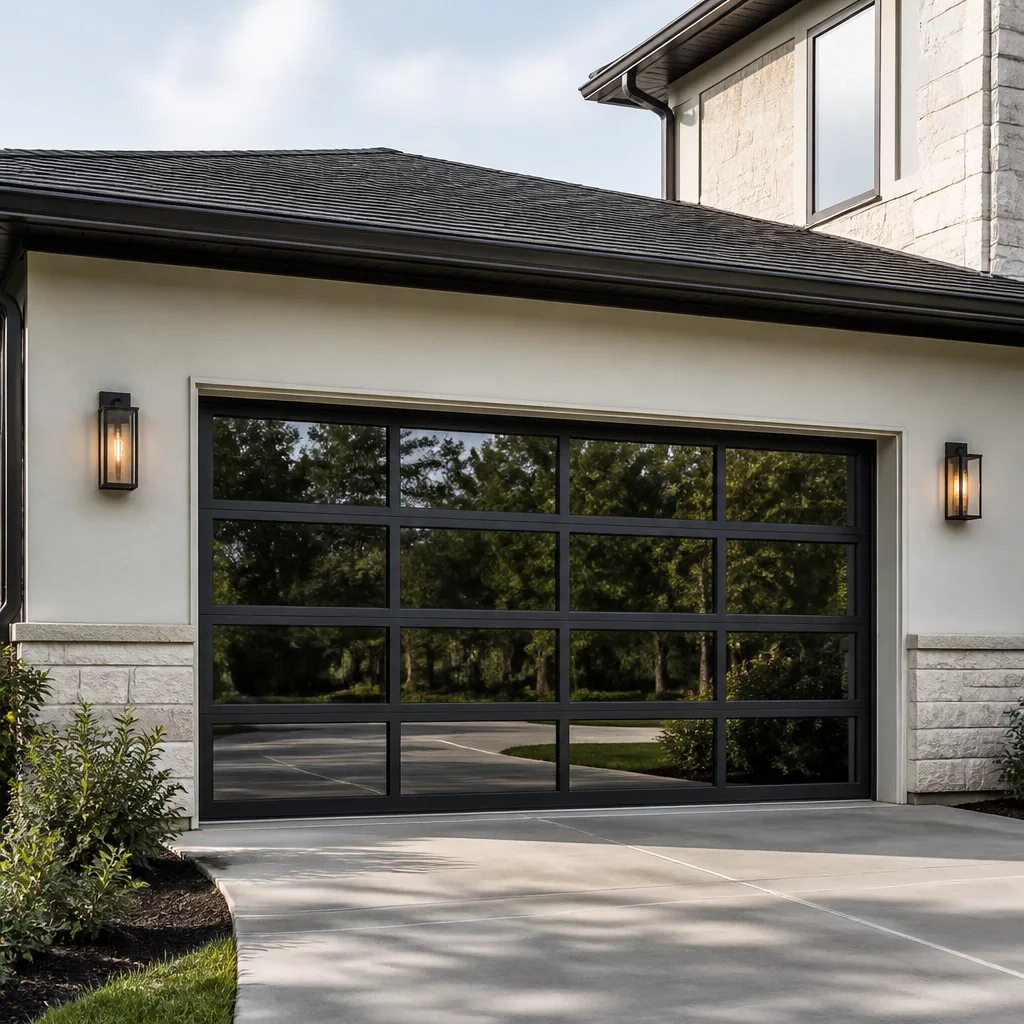
Full-view aluminum doors with tempered glass panels have gained traction in contemporary Hill Country builds. The frame is naturally corrosion-resistant, but the thermal performance is poor without a thermal break, and the glass panels transmit heat directly into the garage. We specify these only for detached garages or workshop spaces where climate control is not the priority, and always with low-E glass.
Vinyl and Fiberglass
Vinyl resists denting and never needs painting, which sounds ideal. In practice, Fair Oaks Ranch’s UV intensity embrittles vinyl over time, and the material expands and contracts more than steel, stressing corner joints. Fiberglass is similarly UV-vulnerable and can delaminate in sustained heat. We do not recommend either for primary residential garage doors in this market.
Material Selection Summary
- Steel with thermal-break core: Best all-around for durability, insulation, and low maintenance in Fair Oaks Ranch conditions
- Wood composite: Best for aesthetic match to Hill Country architecture without solid wood upkeep
- Solid wood: Appropriate only for homeowners committed to a re-staining cycle every 5-7 years
- Aluminum/glass: Limited to detached or non-conditioned spaces with low-E glass specified
- Vinyl or fiberglass: Not recommended for primary residential use in this climate
Sizing and Clearance: Matching Local Architecture
Fair Oaks Ranch development patterns create sizing needs that differ from standard national inventory. The lots are oversized, the homes are substantial, and the garages reflect both. A significant percentage of homes built after 1995 include 3-car garages with a double-wide opening (16 feet by 7 or 8 feet) paired with a single bay (9 or 10 feet wide). Newer construction in The Summit and Sendera Ranch frequently specifies 18-foot-wide double openings and 10-foot heights to accommodate lifted trucks and recreational vehicles.
Standard off-the-shelf doors stop at 16 by 7. Anything beyond that is custom-ordered, with lead times of 3-6 weeks depending on manufacturer and finish selection. This matters for replacement timing: a homeowner with a failed door on an 18-foot opening cannot solve the problem overnight from inventory.
Headroom and Sideroom: The Measure That Matters
Headroom, the distance from the top of the door opening to the nearest obstruction, determines track configuration. Standard residential installation requires 12 inches of headroom for a torsion spring system. Low-headroom track kits can operate in 9-10 inches, but they increase side load on the opener and reduce spring life. We have encountered Fair Oaks Ranch homes with finished bonus rooms above the garage where headroom drops to 7 or 8 inches, requiring specialized rear-mount torsion hardware or a wall-mounted opener like the LiftMaster 8500W.
Sideroom, the horizontal space between the door opening and the wall framing, needs 3.5 inches minimum for standard track, 5 inches for an automatic opener with rail support. Older Fair Oaks Ranch homes with thick limestone veneer or unconventional framing sometimes fall short, requiring custom track brackets or offset mounting.
Measuring Correctly
- Measure the width and height of the finished opening, not the door itself. The door is sized to the opening, with tolerance for frame and seal.
- Measure headroom at the center, left, and right. The minimum dimension governs.
- Measure sideroom on both sides. Asymmetry is common and must be noted.
- Measure backroom, the depth from the opening to the rear wall, to confirm opener rail and door stack clearance.
- Note any obstructions: attic access stairs, ductwork, electrical panels, or structural beams that intersect the door path.
These five measurements, taken with a steel tape and recorded in inches, are what a qualified installer needs to specify the correct door and hardware. Anyone who quotes a replacement without them is guessing.
Insulation Explained: R-Value vs. Thermal Break
Texas heat makes garage door insulation a genuine comfort and efficiency issue, not a marketing checkbox. But the specification is widely misunderstood, and manufacturers exploit that confusion.
R-value measures thermal resistance. A higher R-value means slower heat transfer through the door panel material itself. Fair Oaks Ranch homeowners should look for R-values of 12-18 for attached garages with conditioned space above or adjacent. Detached or unconditioned garages can accept R-8 to R-10.
Here is what national marketing does not emphasize: R-value alone does not stop thermal bridging. A steel door with polystyrene insulation rated at R-10 but no thermal break will still conduct heat straight through the steel skins at the edges, hinges, and panel seams. The interior surface becomes a radiant heat emitter on August afternoons, and the garage temperature climbs regardless of the R-value number.
A thermal break is a physical separation, typically a vinyl or composite strip, between the exterior and interior steel skins. It interrupts the conductive path. Doors with true thermal breaks feel noticeably cooler to the touch on the interior face, and the garage temperature stays closer to ambient. Clopay’s Intellicore and similar polyurethane-injected doors with integrated thermal breaks outperform polystyrene-laminated construction by a meaningful margin in Fair Oaks Ranch’s heat.
The practical test: on a 100-degree day, place your hand on the interior face of the door. If it feels hot, you have thermal bridging regardless of the R-value sticker. If it feels merely warm, the thermal break is doing its work.
For homeowners with living space above the garage, this distinction translates directly to HVAC load and comfort. A thermally broken door can reduce the temperature differential by 15-20 degrees compared to a non-broken equivalent. Over a Texas summer, that is measurable energy cost and sleep quality.
Openers and Smart Features That Hold Up
The opener does the actual work, yet homeowners routinely underspecify it. A 1/2-horsepower chain-drive opener on a heavily insulated 16-by-8 door is a failure waiting to happen. The motor runs at its thermal limit, the chain stretches, and the safety reverse system becomes unreliable as the door’s actual weight drifts from the original spring balance.
Sizing by Door Weight and Cycle Count
Door weight, not opening dimensions, determines opener sizing. A standard uninsulated steel door weighs 80-100 pounds. An insulated 18-by-8 door with glass inserts can exceed 250 pounds. The opener must lift that weight through the full cycle without operating near its rated limit.
| Door Type | Approximate Weight | Minimum Opener Size | Recommended Drive Type |
|---|---|---|---|
| Single uninsulated steel (9×7) | 80-110 lbs | 1/2 HP | Belt or chain |
| Double insulated steel (16×7) | 150-200 lbs | 3/4 HP | Belt or screw |
| Double insulated with windows (16×8) | 200-280 lbs | 3/4-1 HP | Belt or direct drive |
| Heavy custom wood or composite (18×8) | 250-400 lbs | 1 HP | Direct drive or jackshaft |
Belt-drive openers, exemplified by the LiftMaster 84501, run quieter than chain and require no lubrication. For bedrooms adjacent to or above the garage, the noise reduction is significant. Screw-drive units perform well in Fair Oaks Ranch’s temperature range but need annual lubrication with specific compound, not generic spray. Chain-drive remains the most economical and longest-lasting for detached or remote garages where noise is not a factor.
Jackshaft and Wall-Mounted Options
For the high-headroom-constrained spaces common in finished Fair Oaks Ranch garages, a jackshaft opener like the LiftMaster 8500W mounts beside the door, freeing ceiling space for storage or aesthetics. These units require a torsion spring system and minimum side clearance, but they eliminate the rail entirely and reduce vibration transfer to the house frame.
Smart Features: Useful vs. Gimmick
MyQ connectivity, standard on current LiftMaster and Chamberlain models, allows remote monitoring and operation via smartphone. The practical value is verification: did the door close when we left for the airport? Did the teenager get home? Battery backup, now required by California code and increasingly standard elsewhere, maintains operation during outages, a genuine safety issue in Fair Oaks Ranch’s occasional severe weather.
Camera integration and auto-close timers are conveniences that some homeowners value and others ignore. We install what the homeowner requests, but we do not upsell features that do not solve a stated problem.
Repair vs. Replace: A Decision Tree
The hardest decision in garage door ownership is knowing when to stop repairing and start replacing. The answer depends on age, failure mode, cumulative investment, and the door’s baseline specification. This framework removes the sales pressure and replaces it with arithmetic.
Step 1: Establish the Door’s Age and Baseline Quality
A builder-grade steel door installed in 2005 with no insulation and minimal wind rating is a poor candidate for repeated repair investment. A premium insulated door from 2015 with a failed spring is almost always worth repairing. The dividing line is roughly 15 years for quality doors, 10 years for builder grade, assuming normal maintenance.
Step 2: Identify the Failure Mode
- Broken spring: Always repairable, unless the door is so obsolete that matching hardware no longer exists. Cost: $180-$340 in Fair Oaks Ranch. A quality spring matched to the door weight lasts 8-12 years at 1,500 cycles annually.
- Frayed or snapped cable: Repairable, but inspect the drum and bottom bracket for wear that caused the fraying. Cost: $150-$280.
- Damaged panel: Individual panel replacement is possible on some models if the manufacturer still produces that skin profile and color. After 7-10 years, color matching becomes approximate. Cost: $300-$600 per panel, if available.
- Opener failure: Motors and circuit boards are replaceable, but if the unit exceeds 12 years and lacks modern safety features, replacement is the better investment. Cost: $400-$700 for repair, $550-$1,200 for quality replacement with installation.
- Multiple component failures: When springs, cables, rollers, and opener all show wear simultaneously, the system is at end of life. Replacement is more economical than sequential repairs.
Step 3: Apply the 50 Percent Rule
When the estimated repair exceeds 50 percent of the cost of a comparable new door, replacement is the rational choice. A $1,800 door with an $1,100 repair estimate is a replace. A $1,800 door with a $280 spring replacement is a repair.
Step 4: Factor in the Intangibles
Curb appeal for pending sale, insulation improvement for comfort, wind-rating upgrade for insurance or peace of mind, and smart opener integration for convenience. These are legitimate inputs, not upsell fabrications. We state the numbers and let the homeowner decide.
Our standing position: garage door repair in Fair Oaks Ranch is appropriate when the door is fundamentally sound and the failure is isolated. Garage door installation in Fair Oaks Ranch is appropriate when the existing door is obsolete, under-specified, or approaching the end of its reliable service life.
What to Expect From a Service Call
A garage door service call is not mysterious, but it is technical. The homeowner who knows what proper service looks like can judge quality before the invoice arrives. This is what a fully prepared truck and technician should bring to a Fair Oaks Ranch driveway.
The Truck Inventory Test
A repair truck that arrives without parts is a diagnosis vehicle, not a solution. For same-day completion, which is the standard we hold ourselves to, the truck should carry:
- Torsion springs in wire sizes from .207 to .283, with multiple inner diameters and lengths to match common Fair Oaks Ranch door configurations
- Extension spring sets for older or low-headroom installations
- Cables, cable drums, and bottom brackets in standard and oversize
- Nylon rollers with sealed bearings, 2-inch and 3-inch
- Hinges, top fixtures, and struts for reinforcement
- Weatherstripping and bottom seal in multiple profiles
- Opener circuit boards, gear kits, and safety sensors for major brands
- LiftMaster, Chamberlain, and Genie opener units for replacement when repair is uneconomical
If the technician says, “I need to order that,” for a common spring or cable, the truck was not stocked for the market it serves. In Fair Oaks Ranch, with our mix of 1990s-era and recent construction, the parts matrix is predictable. A local shop that has worked here for decades knows the inventory by heart.
The Diagnostic Process
- Visual and balance inspection: The technician should check door balance by disconnecting the opener and lifting manually. A properly balanced door stays at any position between fully open and closed. If it falls or rises on its own, the spring system is incorrect.
- Component wear assessment: Rollers, hinges, cables, and springs are examined for corrosion, deformation, or fatigue. The technician should point out specific findings, not deliver a vague “everything is worn” summary.
- Opener force and safety test: The down-force setting and auto-reverse function are tested with a 2×4 or similar object. Federal law requires reversal within 2 seconds of contact; we test to a stricter standard.
- Track alignment and hardware torque check: Bolts loosen from vibration. A proper service includes retorquing all fasteners to specification.
- Lubrication with appropriate compound: Not WD-40, which attracts dust. A lithium-based or silicone garage door lubricant on hinges, rollers, and springs.
The Quote Protocol
The price should be stated in writing before work begins. Not an estimate range, not a “plus parts” figure, but the full amount due upon completion. The homeowner approves it or declines it, with no pressure either way. This is the standard we have maintained since 1984, and it is the standard any reputable shop should match.
Costs and Pricing in Fair Oaks Ranch
Garage door pricing varies with material, size, insulation, hardware grade, and installation complexity. The figures below reflect Fair Oaks Ranch market conditions as of 2024, based on our completed jobs in the area. They are ranges, not quotes; every installation requires measurement and specification.
Repair Pricing
| Service | Typical Range in Fair Oaks Ranch | Notes |
|---|---|---|
| Spring replacement (torsion, standard door) | $180-$260 | Includes both springs, winding, and balance |
| Spring replacement (heavy or high-cycle) | $240-$340 | Oversized doors, commercial-grade springs |
| Cable replacement (pair) | $150-$220 | Includes drum inspection and adjustment |
| Roller replacement (full set, 10-12 rollers) | $180-$280 | Nylon with sealed bearings specified |
| Opener repair (gear, circuit board, or sensor) | $180-$350 | Parts plus labor; replacement if uneconomical |
| Panel replacement (if available) | $320-$650 | Color match approximate after 5+ years |
| Full tune-up and safety inspection | $89 | Our standing seasonal offer |
Replacement and Installation Pricing
| Door Type | Typical Range in Fair Oaks Ranch | Includes |
|---|---|---|
| Single uninsulated steel door, installed | $1,200-$1,600 | Door, standard hardware, basic opener, removal of old |
| Double insulated steel door (R-12 to R-16), installed | $1,800-$2,800 | Door, thermal-break construction, hardware, opener |
| Double insulated with windows or custom finish | $2,400-$3,400 | Clopay Gallery or similar, decorative hardware |
| Wood composite or custom overlay | $2,800-$4,200 | Clopay Canyon Ridge, stain or paint finish |
| Heavy custom or oversized (18′ wide, 10′ high) | $3,200-$4,800 | Reinforced construction, heavy-duty opener |
These prices assume standard headroom and sideroom, accessible electrical for the opener, and no structural modification to the opening. Low-headroom conversions, electrical upgrades, or framing repair add to the total, and are quoted separately after inspection.
Every replacement quote from Mainspring Garage Door Co. includes written specification of the door model, insulation value, wind rating, hardware grade, opener model, and warranty terms. The price is fixed before work begins. There are no surprises on the bill.
Common Mistakes to Avoid
- Ignoring the thermal break: Homeowners in Fair Oaks Ranch compare R-values alone and miss the thermal bridging that makes a high-R door perform poorly. Ask specifically: does this door have a thermal break between skins?
- Matching paint color to a faded sample: A 12-year-old door has shifted color from UV exposure. The new panel or door will never match exactly unless the entire surface is repainted. We advise clients to plan for full refinishing or accept visible variation.
- Installing an undersized opener: The 1/2-horsepower special from a big-box store struggles with insulated double doors and burns out prematurely. The incremental cost of proper sizing is recovered in longevity and reliability.
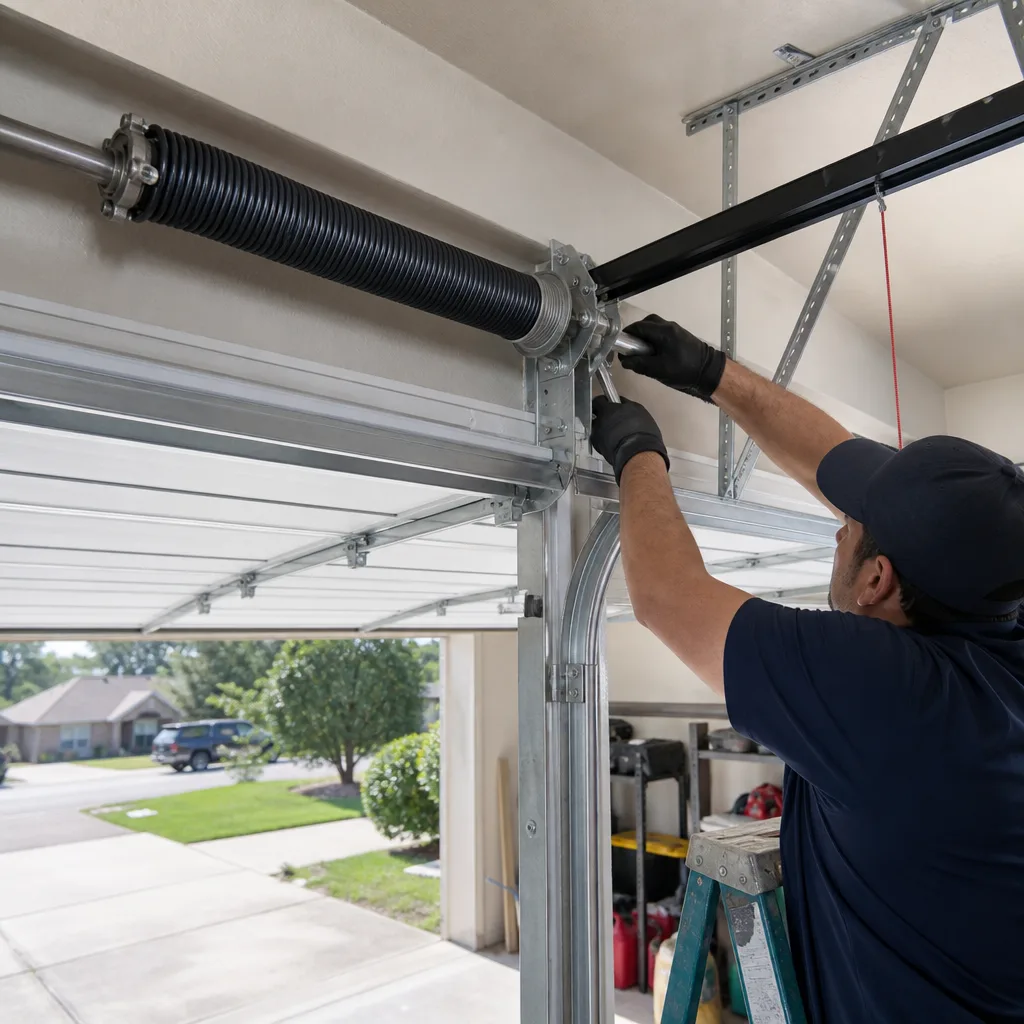
- DIY spring replacement: Torsion springs store lethal energy. The winding cone can fracture, the bar can slip, and the resulting force causes serious injury or death annually. This is not a homeowner repair. We include this warning explicitly because we have seen the aftermath.
- Neglecting track cleaning in caliche conditions: Fair Oaks Ranch dust is abrasive and hygroscopic. Dirty tracks accelerate roller wear and can cause binding that burns out the opener. Annual cleaning and lubrication extends system life by years.
- Accepting a phone quote without inspection: Spring length, wire size, drum type, and door weight cannot be determined from a description. A quote given without seeing the door is a guess, and guesses go wrong in one direction.
When to Call a Professional
Call a qualified technician when the door makes grinding or popping noises, reverses unexpectedly, hangs crooked in the opening, or fails to open with normal opener force. These symptoms indicate spring fatigue, cable wear, track misalignment, or opener malfunction that will worsen with continued operation.
Call immediately if a spring is visibly broken, a cable is frayed or detached, or the door has dropped from one side. Operating the door in these conditions risks further damage to the door sections, the opener, and personal safety.
Do not attempt to adjust or replace torsion springs, cables, or bottom brackets. These components are under high tension and require specialized tools and training. The garage door repair professionals at Mainspring Garage Door Co. offer free estimates in Fair Oaks Ranch. We answer the phone live, 24 hours a day, and we stock the parts to complete most repairs in a single visit. Call (830) 241-0934.
Frequently Asked Questions
Most common repairs in Fair Oaks Ranch range from $180 to $340, with spring replacement typically at the lower end and heavy-door or high-cycle spring work at the upper end. We state the exact price before any work begins, and estimates are free. Call (830) 241-0934 for a specific quote.
A quality steel door with proper maintenance lasts 20-25 years in Fair Oaks Ranch conditions. Builder-grade doors without thermal breaks or adequate wind rating often show failure at 10-15 years. The Hill Country heat and UV exposure accelerate weatherstripping and finish degradation, so annual inspection and lubrication extends service life meaningfully.
Opener replacement is within the capability of some mechanically inclined homeowners, but proper installation requires precise rail alignment, correct force and limit settings, and safety reverse verification. Improper installation creates liability and safety hazards. We install and warranty opener work, and the cost difference from DIY is often less than the value of the time and tools involved.
Steel with a thermal-break core and polyurethane insulation offers the best combination of durability, thermal performance, and low maintenance for Fair Oaks Ranch’s heat, UV, and wind conditions. Wood composite is the best alternative for homeowners prioritizing Hill Country aesthetic match without solid wood upkeep.
Disconnect the opener by pulling the release handle, then lift the door manually to waist height. A properly balanced door stays in position without rising or falling. If it drifts in either direction, the spring system is incorrect and needs adjustment. Do not attempt spring adjustment yourself; the stored energy is dangerous.
We complete most repairs in a single visit because our trucks carry the common springs, cables, rollers, and opener parts for Fair Oaks Ranch door configurations. For replacement and new installation, we measure, specify, and schedule; that work is not rushed. Emergency repairs are answered live 24/7, and we arrive when we say we will.
The Bottom Line
A garage door in Fair Oaks Ranch works harder than most homeowners realize, through 1,500 annual cycles, temperature swings of 80 degrees, wind gusts above 50 mph, and caliche dust that infiltrates every moving part. The right door is steel with thermal-break insulation, properly sized to local architecture, paired with an opener matched to actual door weight, and maintained on a schedule that respects local conditions rather than generic manufacturer guidance. The right service relationship is with a shop that stocks parts, answers the phone, states prices upfront, and returns if the work is not right. Mainspring Garage Door Co. has operated on those terms since 1984. For a free estimate on repair, replacement, or new installation, call (830) 241-0934.
Written by Carl Dutton, Owner at Mainspring Garage Door Co., serving Fair Oaks Ranch since 2016.