
Last updated September 11, 2026
Full 25-point door and opener safety check with every visit - springs, cables, rollers, tracks, and your LiftMaster or Chamberlain opener included
You get a price before we start. It does not change when the truck arrives.
LiftMaster openers
 Before
 After
After Before
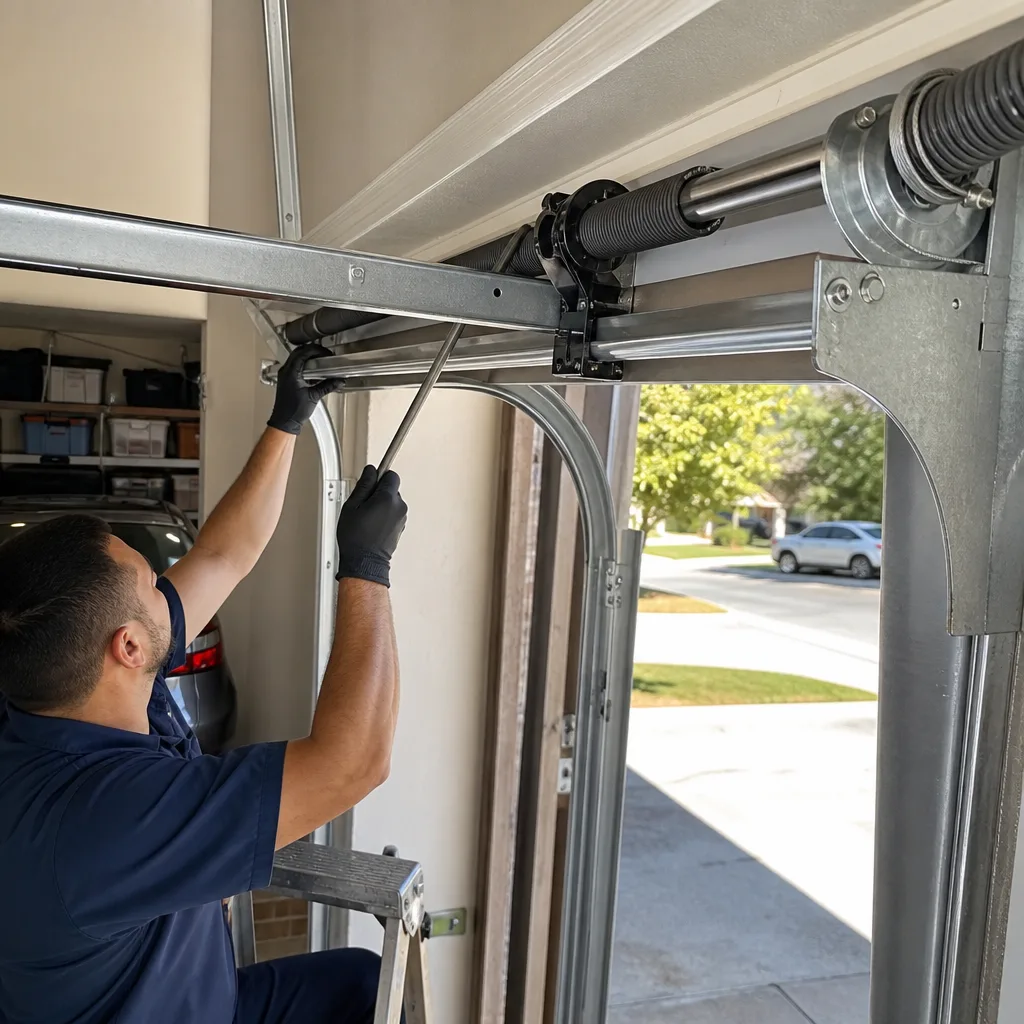 After
After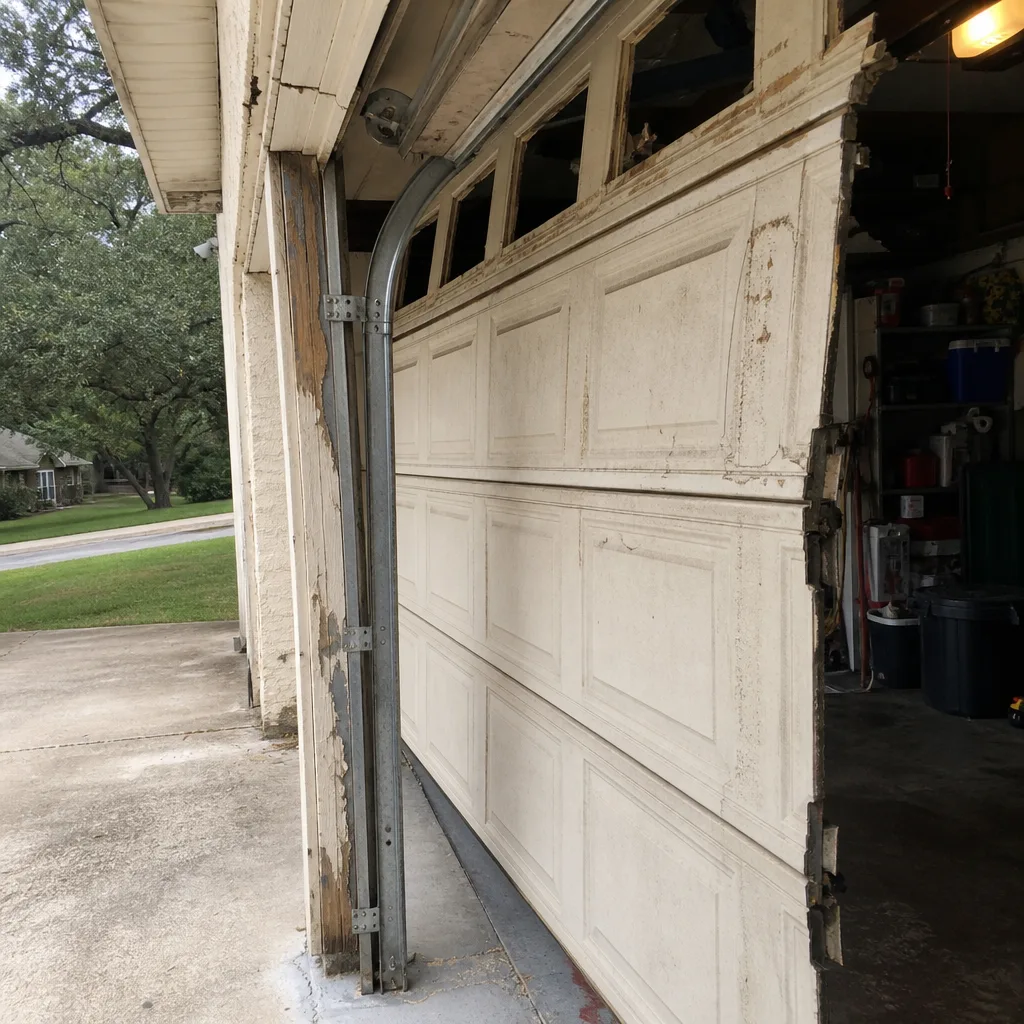 Before
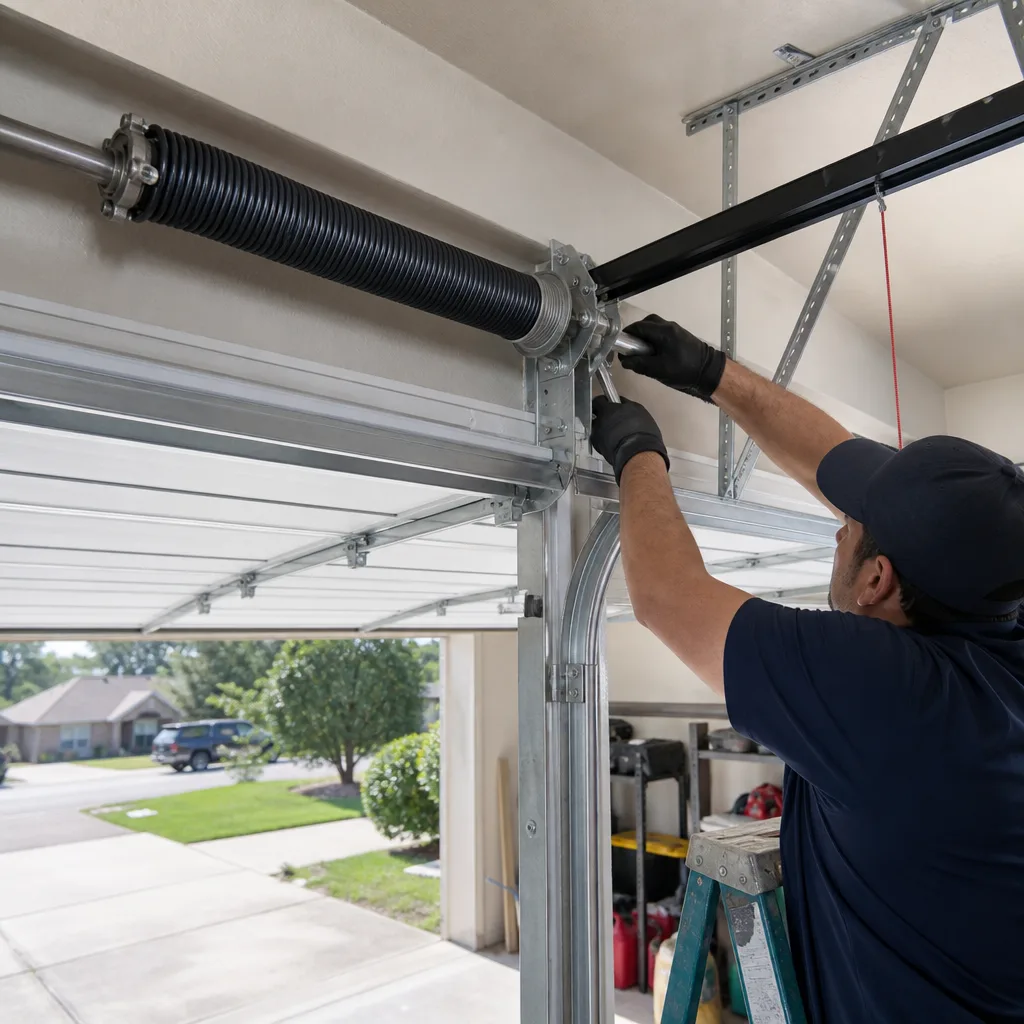 After
AfterGarage Door Warning Signs: A Fair Oaks Ranch Homeowner’s Reference Guide
A garage door that takes two seconds longer to open than it did six months ago is not “getting old.” It is displaying measurable spring fatigue, and the spring will break at full tension, usually on a weekday morning when you’re leaving for work. In Fair Oaks Ranch, where summer heat pushes metal components past 140 degrees and limestone soil shifts concrete slabs seasonally, these warning signs arrive earlier and speak louder than they do in milder climates. This guide names each warning sign, explains the mechanical cause behind it, and tells you how much time you realistically have before it becomes a bigger repair. For a broader overview, see our Complete Guide to Garage Door in Fair Oaks Ranch. You’ll learn to read your door’s sounds, spot visual failures before they strand your car, and know which symptoms mean “schedule it this month” versus “stop using the door today.”
Quick Answer
Most garage door failures give clear warnings days or weeks before they become emergencies. The critical warning signs are: slow or labored movement, loud grinding or popping sounds, visible sagging or panel misalignment, a door that reverses unexpectedly, and gaps or rust on the torsion springs. If your door exhibits any of these symptoms, it needs professional inspection within days, not weeks.
Table of Contents
- The Sound Dictionary: What Your Garage Door Is Telling You
- The Visual Sag Test: Checking Panel Alignment Without Tools
- The Monthly Reversal Test Every Homeowner Should Run
- Response-Lag Diagnosis: Spring, Roller, or Opener?
- Schedule It This Month vs. Stop Using the Door Today
- Fair Oaks Ranch Climate and Soil Factors That Accelerate Wear
- Common Mistakes to Avoid
- When to Call a Professional
- Frequently Asked Questions
The Sound Dictionary: What Your Garage Door Is Telling You
Your garage door produces a predictable acoustic signature when it is healthy. Any deviation is a diagnostic tool. After 42 years in this trade, we’ve learned that homeowners who describe sounds accurately get faster, more precise repairs. Here is what each sound means, what component is failing, and what the repair typically costs in the Fair Oaks Ranch market.
Grinding
Grinding is the sound of metal dragging against metal without adequate lubrication or with deformed contact surfaces. It usually originates from the rollers, the opener’s drive gear, or the torsion spring’s bearing plates.
- Roller grinding: Steel rollers running dry in their tracks produce a low, continuous growl. In Fair Oaks Ranch, dust from nearby construction and limestone particulate accelerates this wear. Cost to address: roller replacement runs $120-$220 for standard steel, $180-$320 for sealed nylon rollers that run quieter and last longer.
- Opener drive gear grinding: A higher-pitched, mechanical grinding from the motor housing means the nylon drive gear is stripping. This is common in older Craftsman and Raynor chain-drive units after 10-15 years. Cost to address: gear replacement ($140-$200) or full opener replacement ($450-$750) if the motor is laboring.
- Bearing plate grinding: A rhythmic scrape at the spring’s anchor point means the stationary cone is rotating against a worn bushing. This precedes spring failure. Cost to address: $180-$340 for spring replacement, which includes the bearing plate.
Popping
Popping is the sound of a torsion spring unwinding unevenly, catching on itself, or slipping within its coils. It is a single, sharp report, often repeated at the same point in the door’s travel.
In the Hill Country temperature swings we see in Fair Oaks Ranch, springs expand and contract dramatically. A pop on the first cycle of a cold morning usually indicates a developing stress fracture inside the spring. The spring may complete hundreds more cycles before breaking, or it may break tomorrow. There is no reliable prediction.
Time horizon: Days to three weeks. Cost: $180-$340 for standard torsion spring replacement. We carry springs for all common door weights and heights on our trucks.
Scraping
Scraping is a continuous, metallic drag, lower in pitch than grinding. It means the door is physically contacting the frame, the track, or the weather stripping.
- Track misalignment: The most common cause in Fair Oaks Ranch, where foundation movement from expansive clay and limestone soils shifts door frames. Look for rubbed paint or bare metal on the vertical track’s inner edge.
- Warped or delaminated panel: Wooden doors in shaded, north-facing exposures absorb moisture and bow inward. Steel doors with failed bottom seals rust from the inside out, creating irregular edges that catch.
Track realignment runs $140-$220. Panel repair or replacement varies widely by material and size.
Squealing
High-pitched squealing from an opener motor indicates electrical stress, usually from a door that is too heavy for the opener’s rating. This happens when springs weaken and the opener compensates by drawing more amperage. The motor overheats, the thermal protector trips, and eventually the motor fails entirely. Address the springs before replacing the opener, or you will replace the opener twice.
The Visual Sag Test: Checking Panel Alignment Without Tools
You do not need a level or measuring tape to detect a door that is tracking out of true. You need ten seconds and the right vantage point.
- Close the door fully. Stand inside the garage, facing the door, with your eyes at the height of the horizontal track.
- Look across the top edge of the door. The gap between the door’s top panel and the header should be uniform left to right. Any taper indicates a cable length imbalance or a spring that is fatiguing unevenly.
- Open the door halfway. Stop it manually if necessary. The bottom edge should be parallel to the floor. A corner that hangs lower than the opposite side means a cable has stretched, a drum has slipped, or a bottom roller has jumped its track.
- Inspect the vertical tracks from the side. They should plumb straight. In Fair Oaks Ranch homes built on sloped lots, we frequently see tracks that have tilted with foundation settlement, creating a binding condition that mimics opener failure.
What asymmetry indicates: A door that is even one inch out of parallel places unequal load on the opener, the springs, and the rollers. The opener’s rail flexes. The springs fatigue asymmetrically. The rollers bind and flatten on one side. This is how a $200 alignment issue becomes a $700 multi-component failure.
In the Sendero Ranch and Fair Oaks Ranch proper neighborhoods, we see this pattern repeatedly in homes built between 1995 and 2008, when foundation specifications were less rigorous for hillside lots. If your home sits on a noticeable grade, check this monthly.
The Monthly Reversal Test Every Homeowner Should Run
Every automatic garage door manufactured since 1993 must reverse upon contacting an obstruction. Federal law (UL 325 standard) requires this. The test takes 90 seconds. The consequences of a failed reversal are severe: crushed pets, injured children, damaged vehicles, and liability exposure.
How to Run the Test
- Place a 2×4 board flat on the floor, centered under the door’s path.
- Close the door using the remote or wall button.
- The door must reverse within two seconds of contacting the board.
- If it does not reverse, or if it reverses before contacting the board, the opener’s force settings or safety sensors need adjustment.
What a Failed Reversal Means
A door that fails to reverse has one of three problems:
- Excessive closing force: The opener is overriding the safety system because the door is too heavy for the spring balance. This is a spring problem masked as an opener problem.
- Misaligned or dirty safety sensors: The photo eyes (usually mounted 4-6 inches above the floor) are knocked out of alignment, obscured by dust, or degraded by sun exposure. In Fair Oaks Ranch, west-facing garages receive intense afternoon sun that can blind infrared sensors. We install sun shields when this is the cause.
- Faulty logic board: The opener’s internal controller is not processing the safety input. This is less common but not rare in units over 12 years old.
Critical distinction: A failed reversal is not a maintenance item. It is a safety code violation. Do not operate the door in automatic mode until it is corrected. The Garage Door Opener in Fair Oaks Ranch page covers sensor alignment and force calibration in detail.
Response-Lag Diagnosis: Spring, Roller, or Opener?
When a door moves slowly, homeowners and even some technicians misdiagnose the cause. The wrong diagnosis means the wrong repair, and the symptom returns. Here is how to distinguish the three common causes before calling anyone.
Spring Fatigue
The symptom: The door opens slowly but closes at normal speed. Or the door feels heavy when lifted manually (disconnect the opener first by pulling the red release cord).
The test: With the opener disconnected, lift the door to waist height and release it. A properly spring-balanced door will stay put or drift slowly. A door with fatigued springs will fall heavily.
Why it matters: The opener is not designed to lift the full weight of the door. It is designed to move a balanced door. Springs carry the weight. When springs weaken, the opener strains, overheats, and fails prematurely. We see this constantly in Fair Oaks Ranch, where summer heat accelerates metal fatigue. Replacing the opener without addressing the springs is a waste.
Worn Rollers
The symptom: The door starts normally, then slows or labors at a specific point in its travel. The sound is a dry, rolling resistance rather than motor strain.
The test: With the opener disconnected, lift the door slowly. Resistance at a specific height indicates a flat-spotted roller, a dented track section, or debris in the track. Mark the height and inspect that area.
Fair Oaks Ranch note: Rollers in homes near active construction (the expansion areas along Dietz Elkhorn and Borgfeld Roads) accumulate grit that embeds in nylon rollers and scores steel ones. Sealed bearing nylon rollers resist this; unsealed steel rollers do not.
Opener Issues
The symptom: The motor runs but the door moves slowly, or the motor hums without moving. The door moves freely when disconnected.
The test: Disconnect the door. If it moves easily by hand, the problem is in the opener: worn drive gear, failing capacitor, or degraded motor bearings.
Cost context: Opener repair runs $140-$280. Full replacement with a modern belt-drive unit (LiftMaster or Chamberlain) runs $550-$850 installed. For doors over 16 feet wide or solid wood construction, a 3/4-horsepower unit is minimum.
Schedule It This Month vs. Stop Using the Door Today
Not every warning sign demands immediate action. Some allow measured scheduling. Others mean the door is unsafe to operate. Here is our honest assessment, based on what we’ve seen across thousands of Fair Oaks Ranch service calls.
Schedule It This Month
- Gradual slowing over months: Spring fatigue progressing predictably. The door still balances manually. Schedule within two to four weeks; avoid heavy daily use if possible.
- Intermittent squeaking: Lubrication issue or early roller wear. Not urgent unless it progresses to grinding. Lubricate the rollers, hinges, and springs with a silicone-based product. If noise persists after lubrication, call.
- Minor rust spotting on springs: Surface oxidation in humid months. Clean with a wire brush and monitor. If rust penetrates to pitting, replacement is near.
- Weather stripping hardening or cracking: Cosmetic and thermal issue. Replace before winter, but the door remains safe.
- Remote range decreasing: Usually battery or antenna issue. Replace the remote battery first. If the wall button works normally, the door system is safe.
Stop Using the Door Today
- Visible gap in a torsion spring: The spring is broken or separating. Do not operate the door. The second spring (if present) is carrying double load and will fail soon. This is a high-tension component that can cause serious injury. Call for same-day service.
- Door falls when released at waist height: The spring system is not functioning. The opener or a person is holding the full weight. This is dangerous.
- Cable off the drum or frayed: Cables are under extreme tension. A frayed cable can snap without warning. A cable off the drum means the door is unsupported on one side and may twist in the tracks.
- Door reverses inconsistently or not at all: Safety system failure. Do not operate in automatic mode. Manual operation only, with constant visual monitoring.
- Panel separation or visible hinge failure: The door’s structural integrity is compromised. It may collapse during operation.
Safety caveat: Torsion springs, cables, and bottom brackets are under lethal tension. Never attempt to adjust, repair, or remove these components. The stored energy in a standard residential torsion spring can cause severe laceration, broken bones, or death. This work requires specialized tools and training. Our technicians carry winding bars, calibrated torque gauges, and the specific springs for your door’s weight and lift configuration.
Fair Oaks Ranch Climate and Soil Factors That Accelerate Wear
Fair Oaks Ranch sits at the edge of the Texas Hill Country, where environmental conditions shorten component life compared to national averages. Understanding these factors helps explain why your door may need attention sooner than a manufacturer’s generic maintenance schedule suggests. Our Seasonal Garage Door Care for Fair Oaks Ranch covers year-round maintenance timing.
Thermal Stress
Garage interiors in Fair Oaks Ranch routinely reach 110-125 degrees in July and August. Metal springs experience thermal expansion and accelerated fatigue. Nylon rollers soften and deform. Opener electronics operate at their thermal limits. We see spring failures cluster in late July through September, when cumulative heat stress peaks.
Foundation Movement
The limestone and expansive clay soils of Bexar and Kendall counties shift with moisture changes. A wet spring followed by a dry summer can move a garage slab 1/4 inch or more. This tilts door frames, misaligns tracks, and stresses hinges. In the older sections of Fair Oaks Ranch, particularly homes built before 2000, we perform track realignment as a routine seasonal service.
Wind Exposure
Fair Oaks Ranch is not in Tornado Alley, but spring thunderstorms produce straight-line winds that test door integrity. Doors without adequate bracing or with degraded hardware can buckle. After significant wind events, run the visual sag test and listen for new sounds.
Hard Water and Corrosion
Well water in outlying Fair Oaks Ranch properties carries high mineral content. When garage floor drainage is poor, standing water leaves mineral deposits on bottom brackets, hinges, and lower track sections. This corrosion is often hidden by dirt and progresses faster than rust from atmospheric moisture alone.
Wildlife and Debris
Rural-interface properties near the golf courses and greenbelts see more rodent activity. Mice chew weather stripping for nesting material and leave debris in tracks. Snakes seeking cool concrete sometimes coil in threshold gaps. Inspect the door’s perimeter seasonally.
Common Mistakes to Avoid
- Ignoring a two-second delay: In Fair Oaks Ranch heat, a door that opens two seconds slower than last year is not “settling in.” It is spring fatigue measurable in lost cycle life. The average spring is rated for 10,000 cycles. At four cycles daily, that is roughly seven years. A two-second lag means you are past 8,000 cycles and accelerating toward failure.
- WD-40 on springs and tracks: WD-40 is a solvent and water displacer, not a lubricant. It strips existing grease and attracts dust. Use silicone-based garage door lubricant or white lithium grease on metal-to-metal contacts.
- Replacing the opener when the door is heavy: We see this misdiagnosis repeatedly. A new opener strains against the same weak springs and fails within two years. Always test spring balance before blaming the opener.
- DIY spring replacement after watching online videos: The videos rarely show the correct winding bars, the torque calculation for your specific door weight, or the containment procedure for a failed winding. We have been called to injuries that occurred on the first turn. This is not a savings; it is a gamble with serious consequences.
- Waiting for both springs to break: Dual-spring systems are designed to share load. When one spring breaks, the other is overloaded and fatigued. Replace both. We quote dual-spring replacement as standard; single-spring replacement on a dual system is false economy.
- Neglecting the reversal test: Homeowners who skip this monthly check discover the failure when the door contacts their vehicle or a family member. The test takes 90 seconds. The average homeowner opens their door 1,500 times annually. That is 1,500 opportunities for a safety system failure to cause harm.
- Hiring based on the lowest phone quote: In Fair Oaks Ranch, we have repaired work from itinerant operators who quoted $99 spring replacement, then installed an undersized spring that failed in eight months. A proper spring is specified by wire gauge, coil diameter, and active coils to match door weight and track radius. There is no universal spring. The lowest quote is rarely the square deal.
When to Call a Professional
Call when you observe any symptom in the “Stop Using the Door Today” category. Call when a sound changes and persists beyond one cycle. Call when the door fails the reversal test. Call when you are uncertain whether a symptom is serious; we will tell you honestly.
Mainspring Garage Door Co. offers free estimates in Fair Oaks Ranch. Our technician arrives with the springs, cables, rollers, and openers needed for most repairs already on the truck. We state the flat price before any work begins. If the work is not done right, we return at no charge. That is our 90-Day Done Right Promise, in writing on every job. Explore more guides & resources on our blog. Call (830) 241-0934 to schedule.
Frequently Asked Questions
Standard torsion spring replacement in Fair Oaks Ranch typically runs $180-$340 for a single spring, or $280-$480 for a dual-spring system, depending on door size and spring specification. We carry springs for all common door weights and heights on our trucks, so most jobs are completed in a single visit. The price is quoted and agreed before any work starts. Call (830) 241-0934 for an exact quote - estimates are free.
No. Springs give audible and visual warnings for days or weeks before breaking: popping sounds, visible gaps between coils, and gradual slowing of door movement. The “sudden” failure is usually a warning that was ignored. In Fair Oaks Ranch’s heat, these warning periods may be shorter than in cooler climates, but they are still present.
Twice yearly: once in late September after summer heat peaks, and once in March before the heavy spring use season. Lubricate rollers, hinges, spring coils, and bearing plates with silicone-based garage door lubricant. Do not lubricate the track itself; this attracts dust and causes rolling resistance.
The door is not reversing “for no reason.” It is responding to a safety system input: misaligned photo eyes, sun glare on the sensors, excessive closing force because the door is too heavy, or debris in the door’s path. In Fair Oaks Ranch, west-facing garages experience sensor blinding from afternoon sun. We diagnose the specific cause and correct it.
Not all noise indicates danger, but all noise indicates mechanical change. Grinding, popping, and scraping signal component degradation that progresses to failure. Squealing may precede opener motor burnout. The only safe approach is to identify the sound’s source and address it before the component fails completely.
Yes. We are factory-familiar with Amarr, Wayne Dalton, and all major brands including Clopay, Raynor, and Craftsman. We carry common repair parts for these doors and can source specialized components when needed. Most repairs are completed in a single visit.
The Bottom Line
Your garage door warns you before it fails. The warnings are specific, measurable, and time-sensitive: sounds that map to components, visual sag that reveals load imbalance, and safety tests that expose hidden danger. In Fair Oaks Ranch’s demanding climate, these warnings arrive earlier and progress faster. The homeowner who learns to read them avoids emergency calls, prevents secondary damage to openers and panels, and pays for targeted repair instead of multi-component replacement. Run the reversal test monthly. Perform the visual sag test seasonally. Address changed sounds within days, not weeks. And when a symptom is unclear or a component is dangerous, call a professional who will state the price upfront, arrive with the right parts, and stand behind the work.
Written by Carl Dutton, Owner at Mainspring Garage Door Co., serving Fair Oaks Ranch since 2016.